Over the past year, journalists at The Marshall Project have persistently covered the many ways people are dying in prisons and jails across the United States. In our ongoing series, Dying Behind Bars, we’ve looked at how people die and why, frequently, no one is held accountable for those deaths. We’ve discovered that, while prisons and jails are meant to be tightly controlled and surveilled environments, dying in them is a fundamentally opaque process.
It isn’t just the families and friends of the deceased who struggle to understand what happened. Investigators tasked with finding out precisely what caused someone to die face similar obstacles, which can lead to low conviction rates for murders committed behind bars. Regulators and lawmakers who want to make reforms to keep incarcerated people from dying preventable deaths find the job is made more difficult by a lack of reliable information.
We’ve looked at how the U.S. Justice Department has tried, and failed, to keep track of who dies in government custody across the country. We’ve delved into a rash of deaths in Mississippi’s prisons, and our coverage helped inspire the Mississippi Department of Corrections to reopen the review process for dozens of homicides that had previously gone unprosecuted. We’ve told stories about how families have fought for accountability. And we’ve created guides on how to get crucial information out of the system — both for journalists and for families seeking not only answers, but justice.
In the process, we’ve learned a plethora of lessons about deaths in custody. These insights are an essential primer.
When someone dies in custody, there’s often no accountability
The ability of incarcerated people to get emergency medical care is far from guaranteed, and that can be fatal.
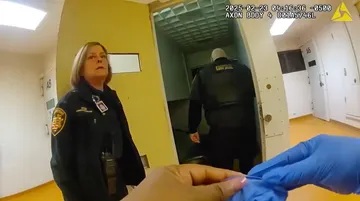
In Ohio’s Cuyahoga County Jail, two dozen people have died in the past six years. Video showed that guards didn’t check Glen Williams Jr. for signs of life after he collapsed on the floor — but one guard did handcuff him before walking away. Williams, who had been begging for medical care for days, died shortly thereafter from a ruptured aorta.
In New York, we found dozens of cases where incarcerated people in state prisons died from treatable ailments. In one case, a man with an infected epiglottis was repeatedly denied care — even though his family members called the facility to beg for help.
In Mississippi, officials often fail to file charges, even in murder cases. An investigation of the suspected perpetrators of the 2021 beating death of John Lowe in a Mississippi prison had been stalled for three years. An indictment against them was only filed after Clarion Ledger reporters asked the local district attorney why. At least 42 people have been killed in Mississippi prisons over the past decade, but only one-third of those homicides were referred to district attorneys for prosecution. Just six resulted in convictions.
Prisons are extremely dangerous places. The homicide rate inside the Mississippi State Penitentiary at Parchman was five times the state’s overall homicide rate, which is already the highest nationwide. Many of these murders were part of a 2020 gang war. Cell phone videos taken from inside showed guards directly facilitating violence among prisoners.
The sheriff of Cuyahoga County, Ohio, where Cleveland is located, had initially rebuffed public pressure to authorize independent investigations into the deaths of three Black women killed during recent encounters with deputies. One of those women, Tasha Grant, whose legs had previously been amputated, died while being physically restrained by law enforcement officials.
When authorities fail to solve in-custody murders, bringing accountability to the system often falls to grieving family members. After authorities ruled her son’s death a homicide, but failed to file charges, a Houston mother led a crusade to find out what happened to him in the jail. She’s held vigils, engaged with local media, filed a class-action lawsuit and spoken before the Texas commission on jail standards.
Getting basic information about a loved one’s in-custody death can turn bereaved family members into detectives. One woman turned to a private Facebook group for family members of people in a particular Nevada prison to get information after her father died there unexpectedly. The cousin of a man who died of cardiac arrest used ChatGPT to figure out what information to request from prison officials.
Even the process of retrieving the body of a family member who has died in custody can be a frustrating, emotionally devastating process. The Marshall Project reviewed the policies for body retrieval from dozens of state prison systems and found that families are sometimes given as little as 48 hours to decide what happens to their loved one.
Incomplete information about in-custody deaths makes prisons and jails more deadly
The U.S. Justice Department maintains a database that is supposed to keep track of everyone who dies each year in prisons, jails and during arrests. The goal is to use the information to prevent more people from dying needlessly. Due to lax enforcement, the database is woefully incomplete and full of inaccurate and outdated information, a Marshall Project investigation uncovered.
Systemic problems with government data collection don’t just exist at the federal level. While at least 46 people have died in Mississippi’s county jails since 2020, there is no centralized authority actively recording this information, despite a federal mandate to do so. Officials in Missouri do keep a record of everyone who dies in the state’s prisons, but when The Marshall Project compared coroner’s reports against government records for people housed in one of the state’s prisons, we found nearly a dozen deaths that were otherwise unaccounted for.
In many states, like Ohio, there aren’t requirements for prisons and jails to count fetuses lost to miscarriage or stillbirth. Without adequate information collection, it is difficult for regulators to improve prenatal health. Following the publication of our investigation into the issue, a bipartisan coalition of lawmakers introduced a bill requiring Ohio’s prisons and jails to report information about every pregnancy that ends behind bars to state officials.
There are rays of hope, from institutional reforms and from incarcerated people themselves
A judge can rule that the agency running a jail has done such a poor job of keeping incarcerated people safe that the facility can be put into receivership, which wrests control from the local government and puts it into the hands of a third party. This has only happened about a dozen times in U.S. history, like with the Raymond Detention Center in Hinds County, Mississippi.
The receiver controls everything in the jail. At Raymond, which has suffered from severe understaffing and high rates of violence, at least six people have died this year.
Dozens of prisons and jails across the country have used biometric bracelets that alert staff when an incarcerated person is experiencing a medical emergency. While not every agency has found them useful, many have reported that the technology has saved lives.
For incarcerated people, when someone in their facility dies, grieving can be a collective process.
At New Jersey State Prison, Thomas Koskovich writes about how his community commemorated a man named Dale: “One guy did a really special thing to honor Dale. Using colored pencils with the tips softened by warm water, he ‘painted’ a banner with Dale’s name and the date in stylized block letters…This banner served two purposes: It was a way for the artist to honor his friend, but it also blocked the view inside Dale’s cell so that someone with sticky fingers wouldn’t be tempted to do a little ‘light shopping.’ I found that to be a strangely endearing moment in a dismal place.”
If your loved one died in prison or jail, we have resources that can help
When a friend or family member dies in custody, it can be overwhelming. We talked to families who offered advice about how to get the information you need.
For example, ask whoever you talk to from the facility about securing their belongings as soon as possible. This is crucial to avoid losing what could be a precious keepsake, since some places keep items only for a set amount of time before throwing them away.
If you’re interested in exploring litigation related to a loved one’s death while incarcerated, one key step is to ask the facility for a “preservation request,” which gets authorities to preserve any records, footage or evidence related to the death. (Here’s a sample preservation request you can crib from.)
Every state handles it differently, but here’s a general list of things that can happen after someone dies in custody: The appropriate state agency is notified, which also reports information to the Justice Department. There will be an autopsy to determine the cause of death and, in some cases, an internal investigation conducted by the agency overseeing the facility and/or an investigation by a state-level agency.
If you have a loved one who has died in a prison or jail — or in a hospital shortly after their release — we want to hear from you. How did you learn about their death? Were you given clear information about what happened? Were you able to claim your family member’s body and personal belongings? Have you struggled to get answers or accountability? Fill out this form, email us, or call us at (929) 524-7282.
If you’re a journalist, we can help you get the scoop
In late 2024, we obtained federal government data about thousands of in-custody deaths that was briefly and inadvertently made public on a Justice Department website. Using a combination of advanced machine learning algorithms and manual work using human judgment, we used the data to gain a more accurate assessment of how people are actually dying in America’s prisons and jails. We found that, on the whole, of the people whose cause of death could be identified, older incarcerated people tended to die of natural causes, like cancer and heart disease, while younger people largely died from preventable causes — like suicide and drug overdose. However, a majority of the records still left the question of how someone died unanswered.
If you’d like to access this data to see how people are dying behind bars in your area, please let us know.
We’ve created a guide for journalists detailing the records you can request to get a picture of what happened, as well as some tips for overcoming common obstacles. For journalists in Missouri, we have an additional resource specifically for getting in-custody death data in your state. You can schedule a free consultation session with journalists from The Marshall Project to help plan out your investigation.
As the effects of climate change intensify, the issue of extreme heat in prisons and jails has become increasingly important. If you’re looking into dangerous temperatures in prisons and jails, check out our reporting guide.
Inadequately staffed prisons are likely to become hotbeds of violence — a problem that seems to be getting worse. Using data from the U.S. Census Bureau, we found that 25 states lost at least 10% of their prison employees between 2019 and 2023. Only three states increased their correctional staffing by 10% or more. Learn more about how to report on your state’s prison staffing.
The filmmakers behind the documentary “The Alabama Solution,” an unflinching look at abuse and resistance inside Alabama’s prisons, created a searchable database of more than 1,400 people who died while incarcerated there. The database is intended to be a resource for journalists and advocates looking to shine a light on dire conditions in the state’s correctional facilities. (Andrew Jarecki, one of the film’s directors, is on The Marshall Project’s board of directors.)
An earlier version of this story incorrectly stated the number of people who die in prisons, jails and law enforcement custody. Thousands of people die each year in these circumstances. We have also updated the post to include additional material from our reporting.