This is The Marshall Project’s Closing Argument newsletter, a weekly deep dive into a key criminal justice issue. Want this delivered to your inbox? Sign up for future newsletters.
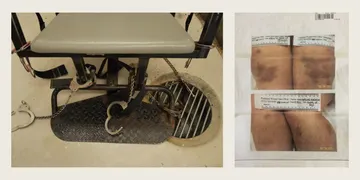
In 1988, a nurse at the Medical University of South Carolina in Charleston decided she was fed up. She and her colleagues had grown alarmed about the number of women coming in to give birth who appeared to be addicted to crack cocaine. The hospital began drug testing pregnant patients — predominantly low-income Black women — and gathered with local law enforcement officials to come up with a plan: If the women tested positive, the hospital would hand them over to police. Soon, women, some still bleeding from childbirth, were being carried out of the hospital in shackles and chains.
The hospital was far from alone. Across the country, fervor over “crack babies,” and particularly Black women who birthed them, was reaching a fever pitch. Many feared the emergence of a permanent underclass of “physically damaged,” biologically inferior children, destined to live off welfare rolls, and believed that women who used crack during pregnancy should be put in jail for child abuse. Later scientific studies would conclude that the crack baby panic had vastly overstated the developmental effects of prenatal cocaine exposure, and that many of the harms initially attributed to the drug were inseparable from overlapping factors like poverty, but the myth stuck. Hospitals began to more widely drug test women at childbirth, states began requiring hospitals to report positive results, and foster care caseloads skyrocketed. By mid-1992, there were more than 160 criminal prosecutions filed in 24 states, 75% of them against women of color.
These cases didn’t just seek to punish women. They helped advance a broader legal principle: The fetus had interests the state could protect, often by taking action against the mother herself.
That principle is commonly referred to as fetal personhood — a legal concept promoted by anti-abortion groups that posits a fetus should be treated legally the same as any person or child.
Initially, higher courts in many states dismissed criminal cases against women. Even some anti-abortion advocates rejected the idea of criminalization — the U.S. Catholic Conference, for example, argued that women should instead receive prenatal care and addiction treatment, according to Mary Ziegler in her book “Personhood: The New Civil War Over Reproduction.” But prosecutors in various states were vehement about using criminal law to protect “unborn children.” They were propelled by leaders in the anti-abortion movement, who saw the strategic benefit in targeting women for whom the public had little sympathy.
Civil rights attorneys and feminists sounded alarms about where that logic could lead. If women could be charged with a crime for ingesting a substance during pregnancy, could criminal charges for use of nicotine or alcohol during pregnancy be next? “There are not enough jail cells in South Carolina to hold the pregnant women who have a drug problem, drink a glass of wine with dinner, smoke cigarettes, fail to take prenatal vitamins, or decide to go to work despite their doctor's advice that they should stay in bed — all of whom could be guilty of the crime of child neglect,” attorney Lynn Paltrow said at the time.
Paltrow helped file a 1993 lawsuit against the Charleston hospital, arguing that drug testing women and reporting them to law enforcement violated their Constitutional rights. The lawsuit eventually found its way to the U.S. Supreme Court, which in 2001 ruled in favor of the patients. The Ferguson ruling, as it came to be known, barred public hospitals from testing patients without their consent for law enforcement purposes.
But Ferguson did not end the surveillance of pregnant women. Over the past two decades of the opioid epidemic, more hospitals began drug testing pregnant patients and their babies, sweeping more families into a system of punishment and control. As a result of state mandatory reporting laws, and barred from reporting women directly to the police, hospitals report cases to child welfare agencies. Those agencies have become the main conduit through which women are referred to law enforcement, our reporting found.
In a recent Marshall Project investigation, my colleague Jill Castellano and I found more than 70,000 parents in 21 states who were referred to police and prosecutors over allegations of substance use during pregnancy. Women have been separated from their children, interrogated or jailed over positive drug tests triggered by poppy seeds, over-the-counter medications and even the fentanyl from their epidurals. The dragnet now reaches far beyond the crack-era stereotype, ensnaring women across racial and class lines. But the underlying premise remains the same: Alleged risk to a fetus can be used to justify state scrutiny of the person carrying it.
In at least three states — Alabama, Oklahoma and South Carolina — prosecutions tied to drug use during pregnancy have led to judicial rulings in support of fetal personhood, according to the legal advocacy group Pregnancy Justice. In 2020, for example, Oklahoma’s Court of Criminal Appeals ruled that the state’s criminal child neglect law applied to an “unborn child.”
Now the anti-abortion movement has set its sights on a bigger goal: Ensuring once and for all that the fetus is entitled to equal rights under the U.S. Constitution. Legal experts said the child welfare authorities’ referrals to law enforcement, and the ensuing criminal cases, could be used to help bolster that argument, which many think has a good chance of success if it wends its way to a Supreme Court with a strong conservative majority.
If that happens, Paltrow believes the consequences would be felt far beyond pregnant women who use drugs.
In several states, women are already restricted from making certain medical decisions, such as getting treatment during a miscarriage or a life-threatening infection during pregnancy. They have been arrested after stillbirths and miscarriages. They’ve been held liable for falling down a flight of stairs, or delaying a Cesarean section, like two of Paltrow’s former clients. Soon, Paltrow told me, women could be barred from becoming police officers or taking other jobs because they might at some point get pregnant, which could put their fetus at risk.
“If you had a law that said we’re going to pass an unequal amendment that makes it official that women do not have the same rights as other people, I think people would be pretty upset,” she said. “This is the world we’re going to live in.”