Search About Newsletters Donate
The Frame

108 Days Apart: A Wife’s Fight to Free Her Husband From Delaney Hall

Sandra Hafraoui spent months trying to bring her husband home after ICE detained him on a 16-year-old deportation order he didn’t know existed.

A photo shows a White woman, Sandra Hafraoui, with medium-length blonde hair, standing outside Delaney Hall, an ICE detention center. She is wearing a black, zip-up hoodie sweatshirt, and metal fencing and a two-story building is visible behind her.
Sandra Hafraoui stands outside Delaney Hall in New Jersey in October 2025, waiting to visit her husband, Latif Hafraoui, in ICE detention.

Latif Hafraoui rarely talks about the 108 days he spent in immigration detention, most of it at Delaney Hall in Newark, New Jersey. He and his wife, Sandra, say they want to forget the fear and anxiety she felt, and the horrors he experienced.

“These guys don’t go by the book of law. They treat immigrants like animals, like we have no rights,” Latif told The Marshall Project. “It was like torture.”

“We’re trying to not remember it and to heal from it,” Sandra said.

The New Jersey couple — she is American, he is Moroccan — had been married 15 years and were headed to Florida when immigration agents detained him at the airport in August 2025. He was locked up at Delaney Hall, the immigrant detention facility currently at the center of opposition against President Donald Trump’s mass deportation program.

Protests erupted outside the facility in May after detained immigrants began a hunger and labor strike over poor conditions inside, including rotten food and inadequate medical care. In an email, the Department of Homeland Security told The Marshall Project the detainees’ claims are false and the hunger strike has ended. The problems there have been longstanding. A year ago, Newark Mayor Ras Baraka was arrested while trying to inspect the facility.

U.S. Immigration and Customs Enforcement detained Latif on an old deportation order he didn’t know existed, he said. An immigration notice went to the wrong address. He missed a court date, and a judge ordered him deported in absentia 16 years ago.

The same judge reversed the deportation order while Hafraoui was in detention, Sandra said.

Held for nearly four months, at Delaney Hall and at facilities in Louisiana and Arizona, Latif says he witnessed guards physically abuse detainees. He spent 10 harrowing days in solitary confinement after he refused to be deported, according to his account and an ICE document. The Department of Homeland Security didn’t immediately respond to a request for comment on the allegations.

Sandra remembers one of their last visits, this time at an ICE facility in nearby Elizabeth, New Jersey, before he was moved again to Delaney Hall: “He was so traumatized, so terrorized. I thought, ‘My god, what did they do to him?’”

Photographer Corrie Aune documented the Hafraouis’ time apart, and their reunion, for The Marshall Project.
A photo shows chalk drawings of hopscotch squares on asphalt. A tub of chalk is visible in the middle of the photo.
A photo shows a woman, Sandra Hafraoui, with medium-length blonde hair, facing away from the camera as she hugs a woman with dark-toned skin.
A photo shows people walking and standing outside Delaney Hall, in front of barbed wire fencing. Behind the barbed wire fencing is a building with square windows.
The
asphalt parking lot outside Delaney Hall where children play while waiting to visit family members inside. Often, they wait hours to enter the facility.
Sandra
embraces Sally Pillay, an immigration activist who volunteers outside the Delaney Hall ICE detention center. Pillay helps provide food, winter clothing and emotional support to families visiting the facility.
Families
leave Delaney Hall after visiting loved ones. Sandra said she watched her husband’s physical and mental state deteriorate in ICE detention.
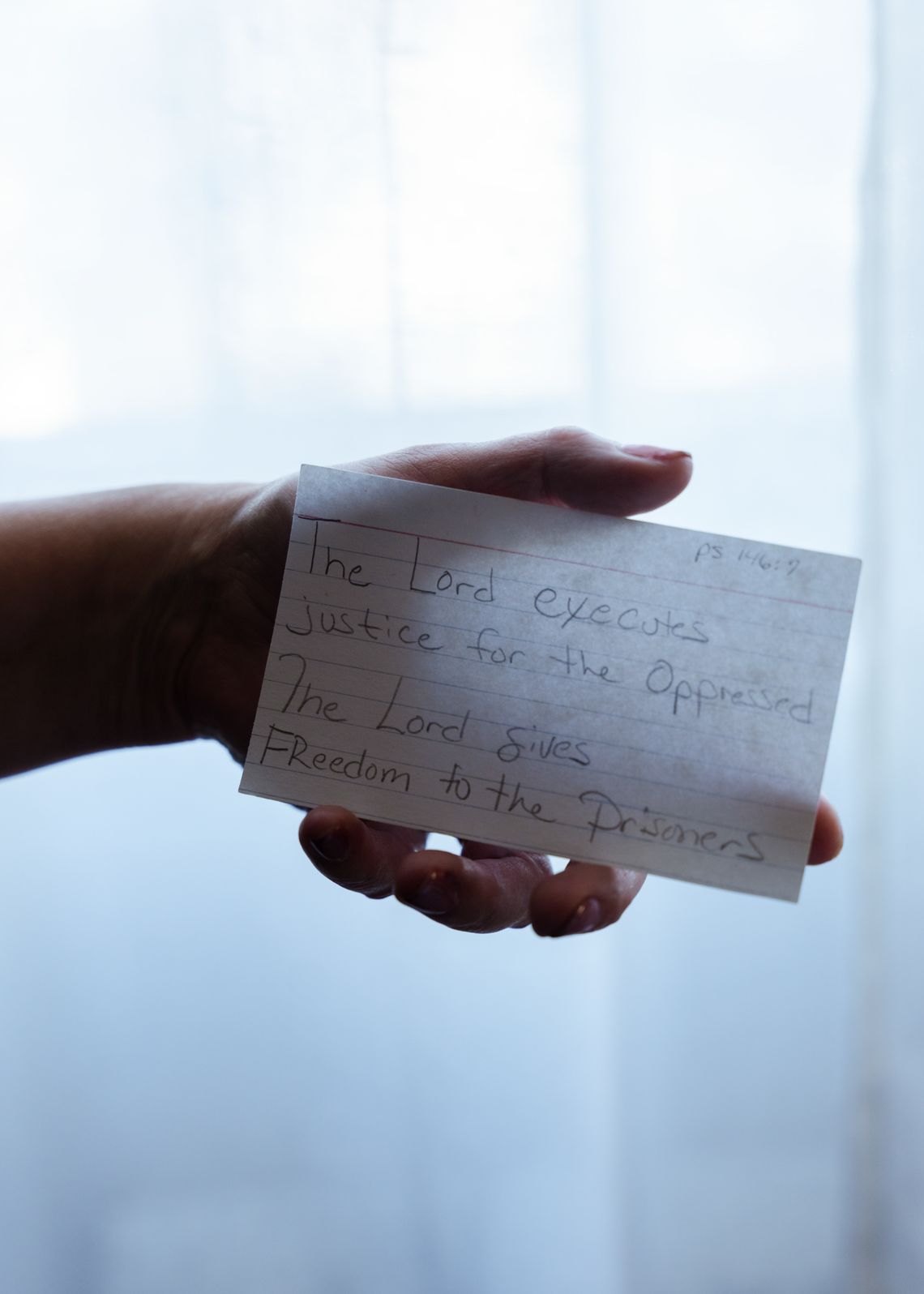
A photo shows a White woman’s hand holding up an index card which has “The Lord executes justice for the oppressed. The Lord gives freedom to the prisoners.” The background is a white window curtain with sunlight shining through it.
At her home in Bayonne, New Jersey, Sandra holds a notecard with a handwritten Bible verse. The cards lined her countertops, bedside table, bathroom mirror and car dashboard. She said the verses gave her strength when she began to feel that her husband would never be released.
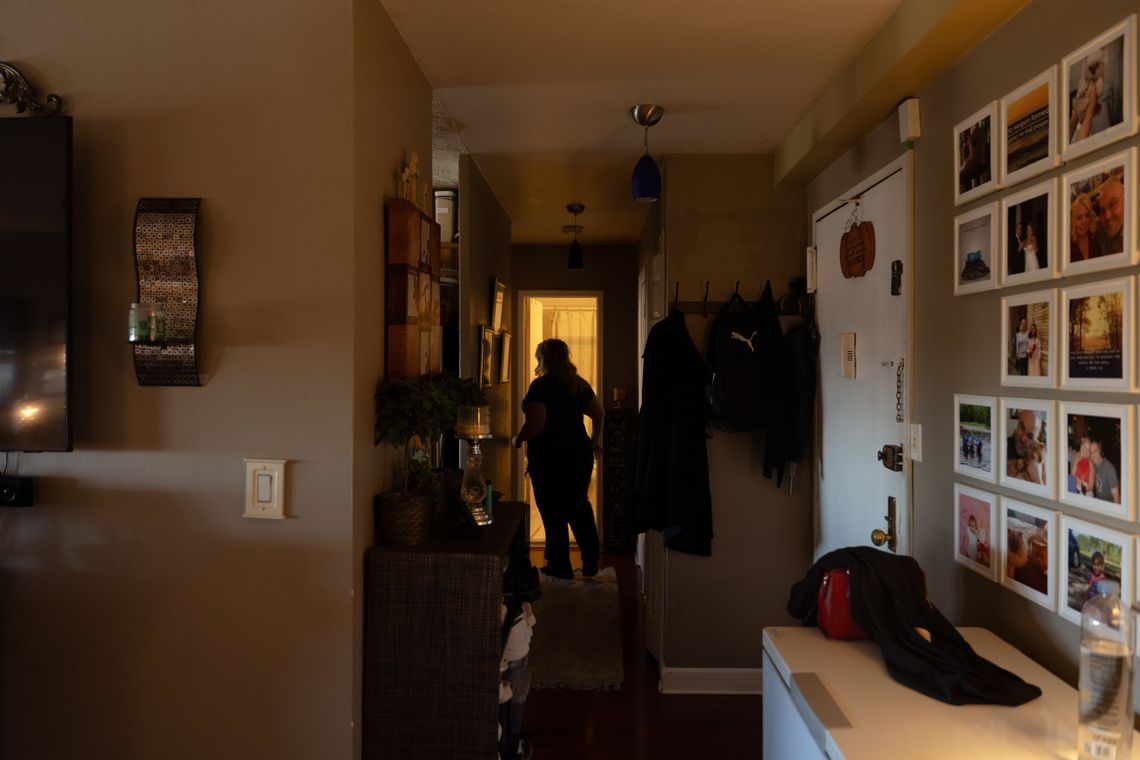
A photo shows the silhouette of Sandra standing in front of her bathroom door at the end of a short hallway. In the foreground on the left is a wall of family photos, a wall-mounted coat rack, and the front door.
Sandra prepares to leave home to visit Latif at Delaney Hall. Around her, family photos line the walls.
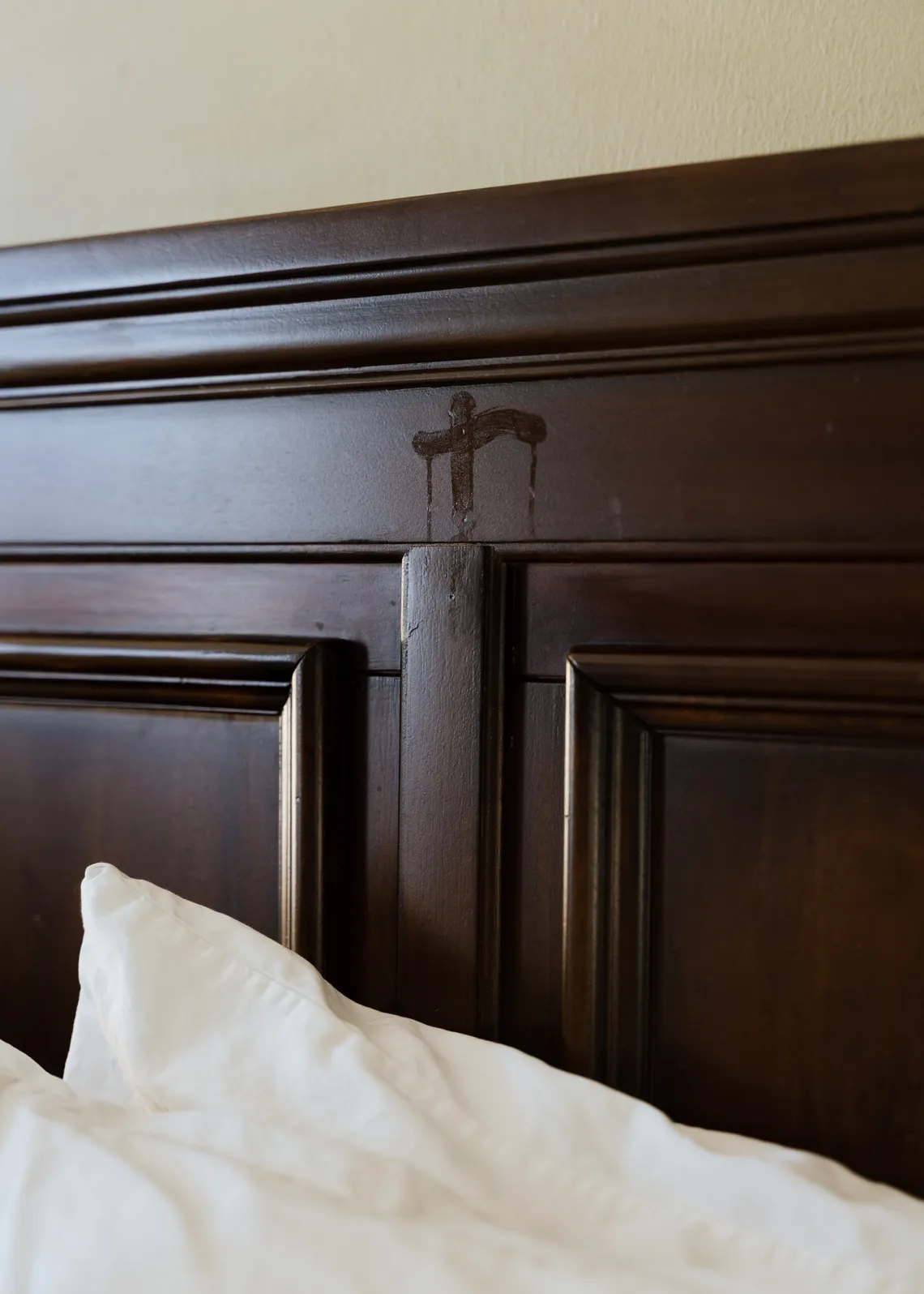
A photo shows a brown wooden headboard of a bed marked with olive oil in the shape of a cross. A white pillow is at the bottom of the photo.
Olive oil in the shape of a cross anoints the bed frame at Sandra and Latif’s apartment. Sandra, who is Christian, painted these crosses throughout her home. “When I’m afraid, these crosses remind me of God’s presence,” she said.
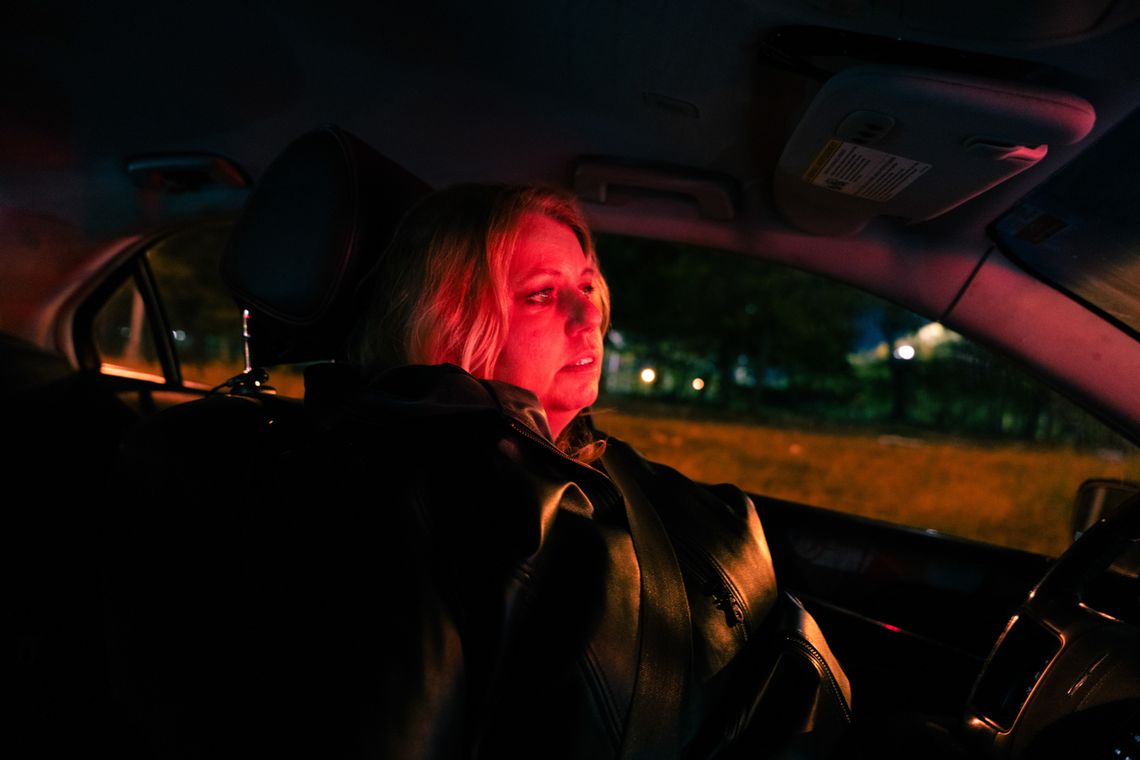
A photo shows a White woman, Sandra Hafraoui, with medium-length blonde hair, sitting in her car at night. A red light shines on her face.
Sandra drives home after visiting Latif. Most nights while he was detained, she struggled to sleep more than a few hours.
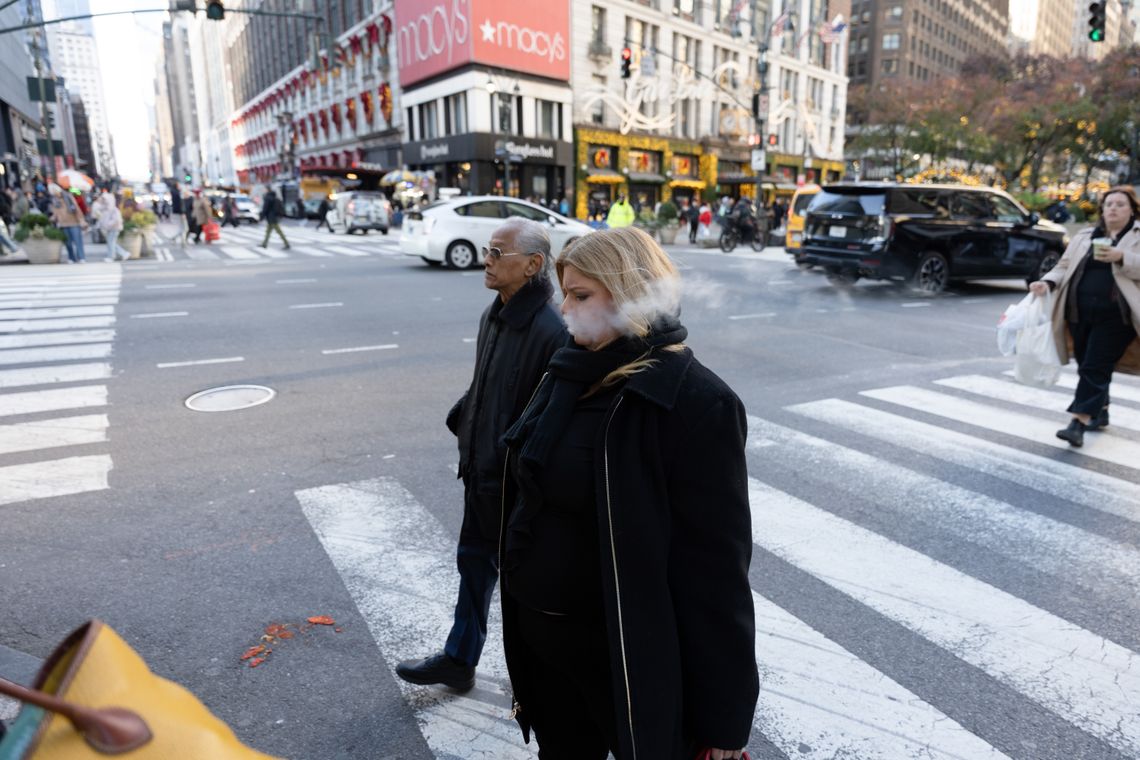
A photo shows a White woman, Sandra Hafraoui, with medium-length blonde hair, crossing the street in New York City. Vape smoke is coming out of her mouth. Cars and shops, including a Macy’s department store, are visible behind her.
Sandra walks through Midtown Manhattan to attend Latif’s bond hearing over Zoom with their lawyer. She picked up a habit of smoking electronic cigarettes to calm her anxiety since Latif’s arrest. “I know this is terrible for me,” she said, laughing. “Latif will hate it when he finds out. But I need something to help me calm down.”
A photo shows the hands of a White woman, Sandra Hafraoui, holding some notecards. She is wearing black.
A photo shows a White woman, Sandra Hafraoui, holding a cell phone and crying. She has blonde hair and is wearing a black coat.
In
the lawyer’s office before Latif’s bond hearing, Sandra holds her Bible verse notecards in her hands and prays quietly. She sweats and has trouble breathing.
In
the street after the postponed hearing, Sandra called her friend Monica. “They didn’t let him out,” she told her. “They didn’t let him out.” A few minutes later, Latif calls Sandra from Delaney Hall. After answering the phone, Sandra begins to weep.
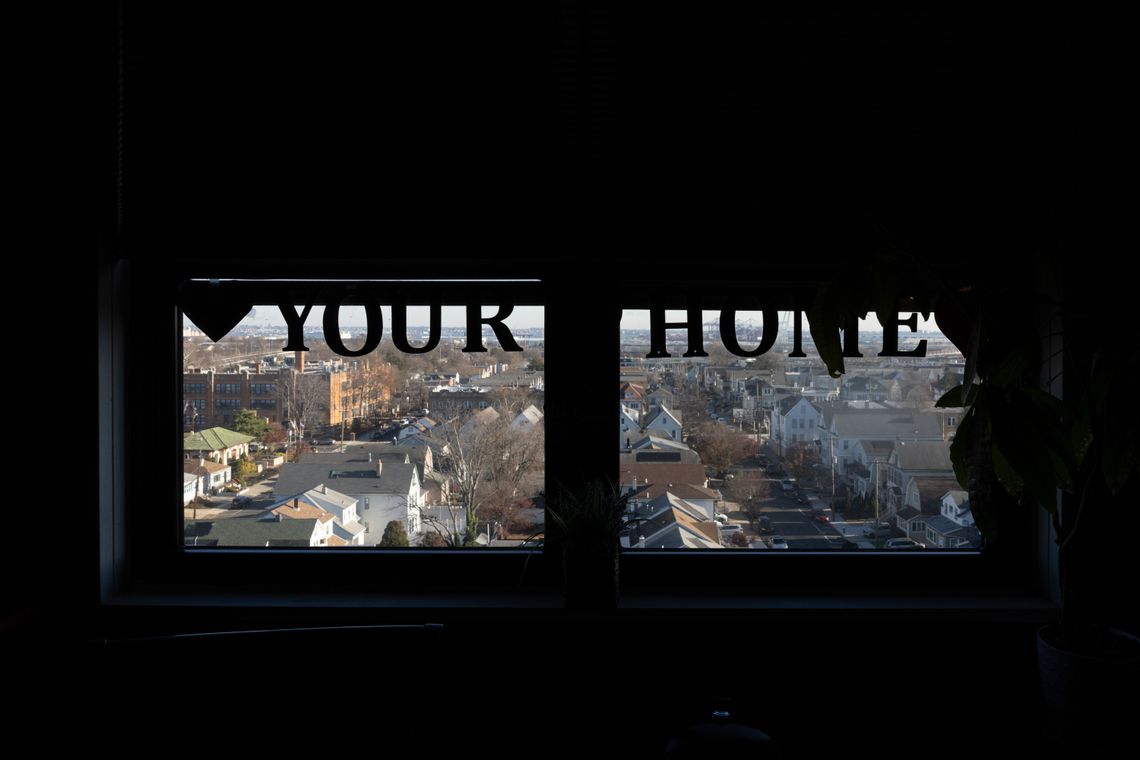
A photo shows the silhouette of a banner that reads “YOUR HOME”, hanging from the top of a window frame. The city of Bayonne is visible through the window.
One week later, the rescheduled bond hearing is successful. With the help of immigrant rights organizations, the $15,000 bond is posted, and Latif is released to go home, where a banner welcomes him.
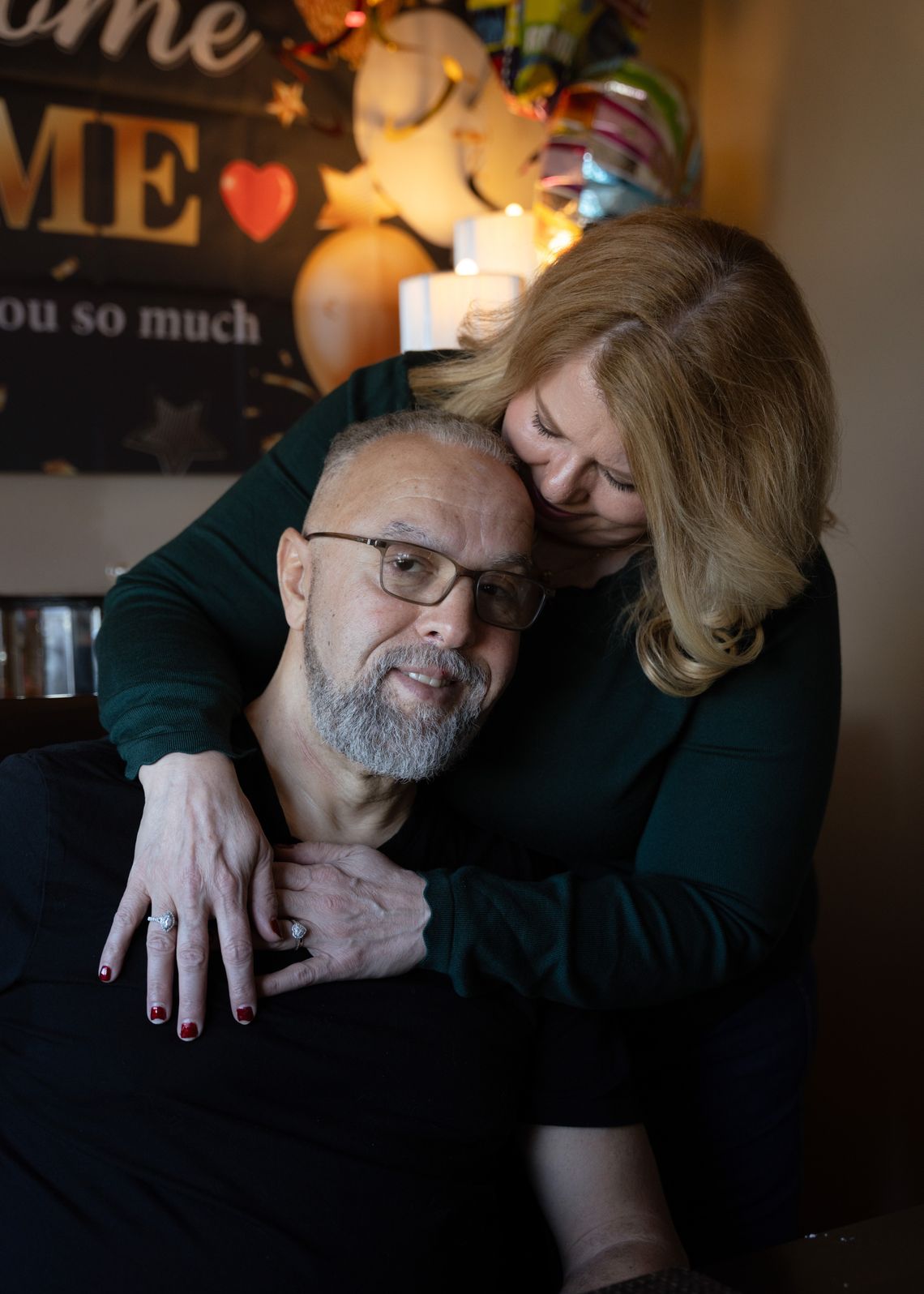
A photo shows Sandra, a White woman, hugging Latif Hafraoui, a man with medium-toned skin. Latif has a gray beard and glasses and is wearing a black t-shirt. Sandra is wearing a green long-sleeved shirt and has medium-length blonde hair.
Sandra and Latif at home, surrounded by the balloons and signs that Sandra bought before Latif was released. They are facing a pile of debt now, Sandra says.
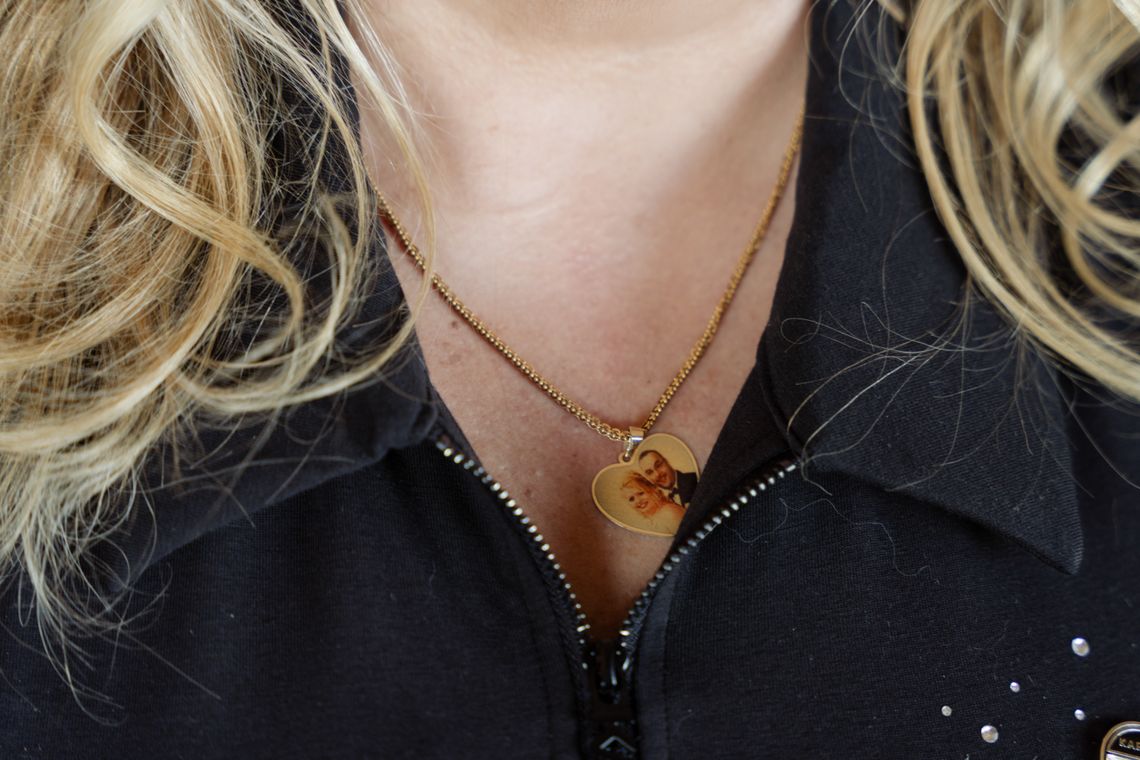
A photo shows a closeup of Sandra’s necklace, which is heart shaped and contains a picture of her with Latif.
Sandra wears a necklace with a photo of her and Latif. The couple fell in love in a New York City bodega, when she was driving for a black car service and he worked behind the store’s counter.
A photo shows Latif Hafraoui, a man with medium-toned skin. Latif has a gray beard and glasses and is wearing a black t-shirt. He is sitting on a chair at his home. A couple of sofas are behind him.
A photo shows a closeup of Latif Hafraoui’s ankle, which has a black monitor on it. He is lifting up the denim of his jeans a little to show the monitor.
Two
weeks after his release, Latif said he still feels tension in his arms and chest. He is unable to sleep through the night. At Delaney Hall, guards would wake him many times, yelling loud announcements, turning on bright lights and making impromptu headcounts. He lost hope he would ever return home to Sandra.
The
couple has applied for Latif’s green card, as the spouse of a U.S. citizen. He wore an ankle monitor for three months until ICE agreed to remove it.
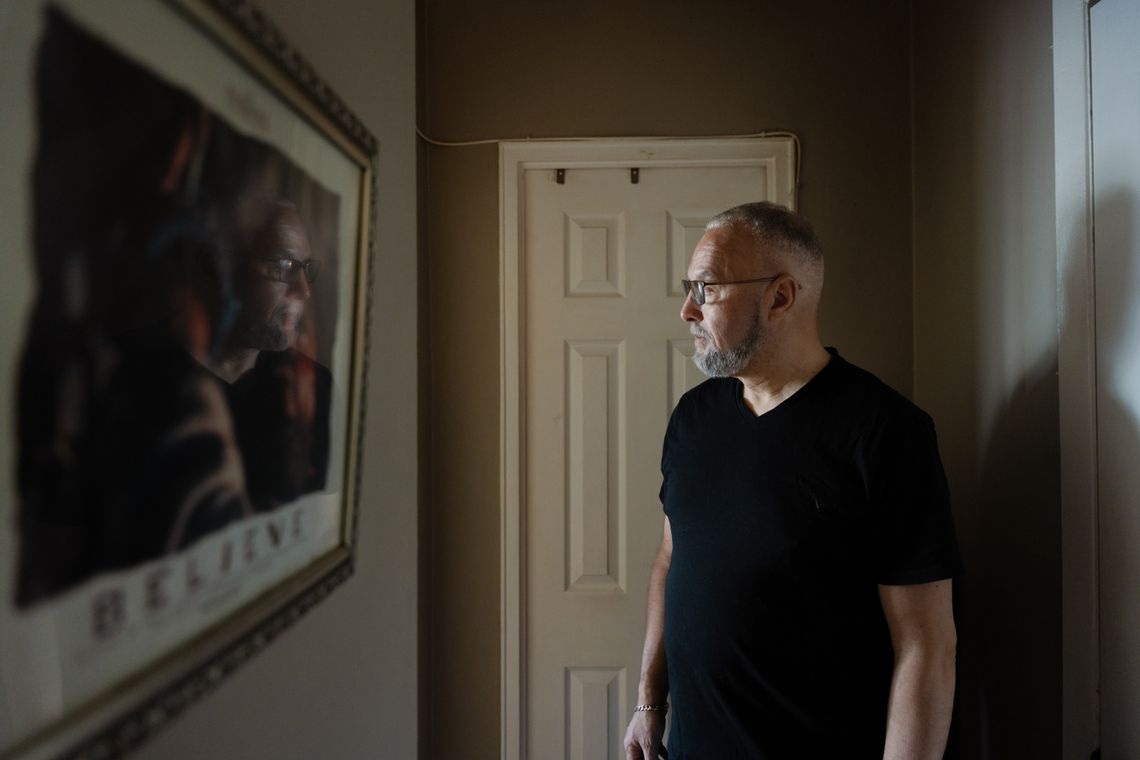
A photo shows a Latif Hafroui, a Moroccan man, standing in front of a door at the end of a hallway. He is looking to the left in the photo. A framed poster is visible on the left side wall with the word “Believe” on it.
“When the guards told me I was being released, all the other guys started cheering for me and coming to hug me,” said Latif. “I think they see me as a hope.”
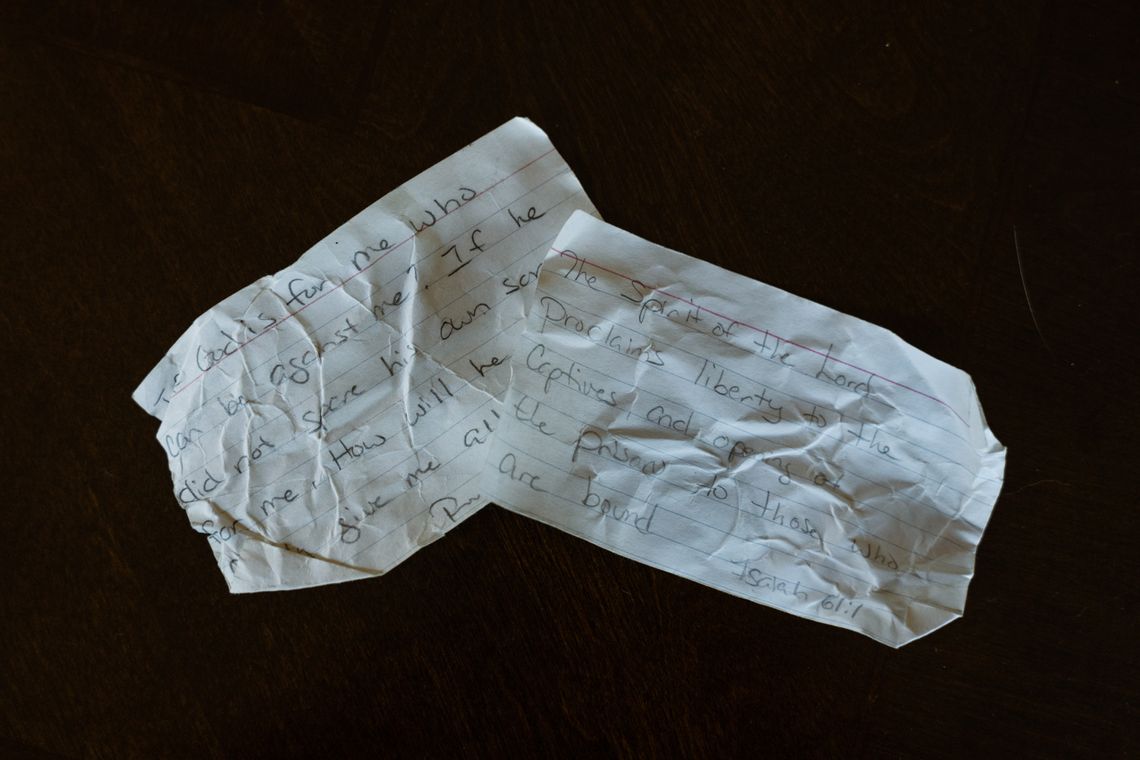
A photo shows two index cards on a black background. One reads: “If God is for me, who can be against me? If he did not spare his own son for me. How will he give me…” The other reads: “The spirit of the Lord proclaims liberty to the captives and opening of the prison to those who are bound.”
The Bible verses that Sandra clutched tightly in her hands during Latif’s bond hearing. “I feel such a great relief that he’s home now,” said Sandra. “But I also feel a sadness that I can’t shake.”
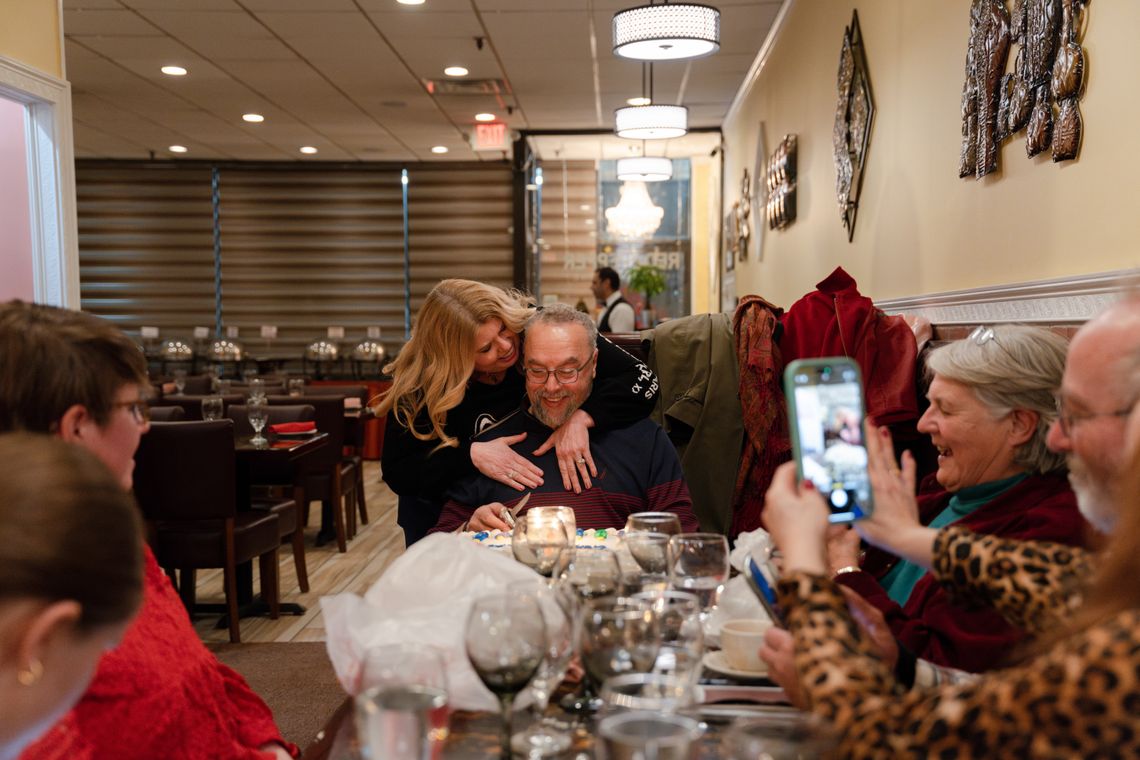
A photo shows Sandra, a white woman, hugging a seated Latif, a Moroccan man, at a restaurant. Five people are sitting around them at the table, and one woman with light-toned skin is holding her phone up to take a picture.
In February, Latif celebrated his 61st birthday surrounded by his wife, friends and the activists who helped secure his release. They are struggling to recover from the immense mental, emotional and financial toll the ordeal has taken.
Tags: Delaney Hall Second Trump administration family separation ICE Immigration Detention Immigrant Families Deportation Immigration and Customs Enforcement Immigration