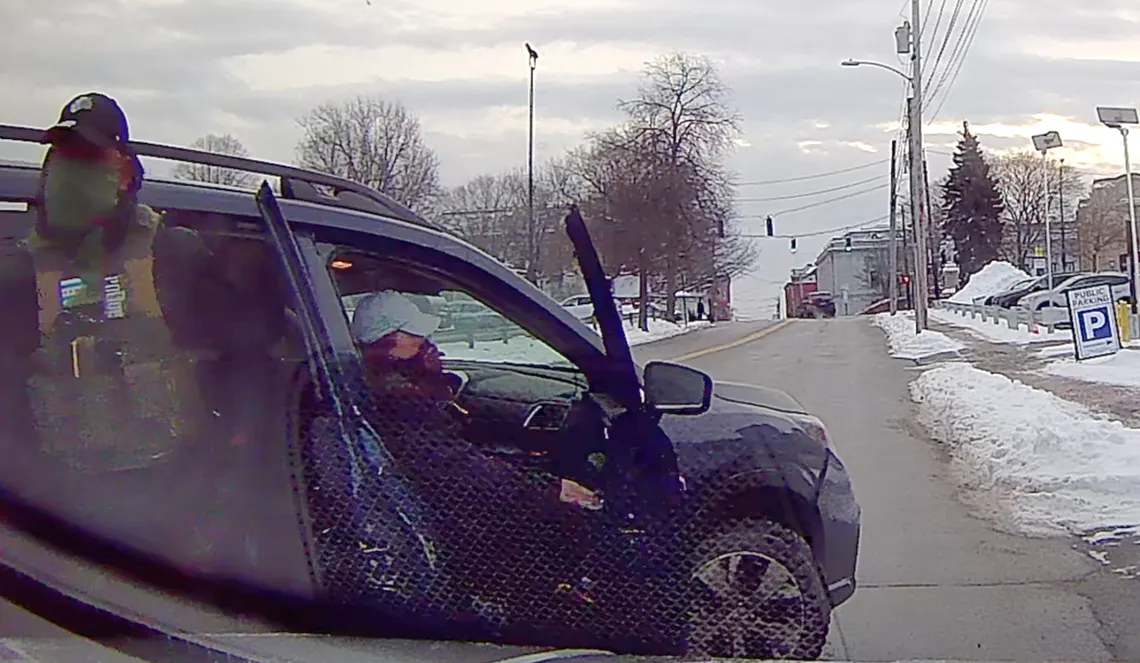
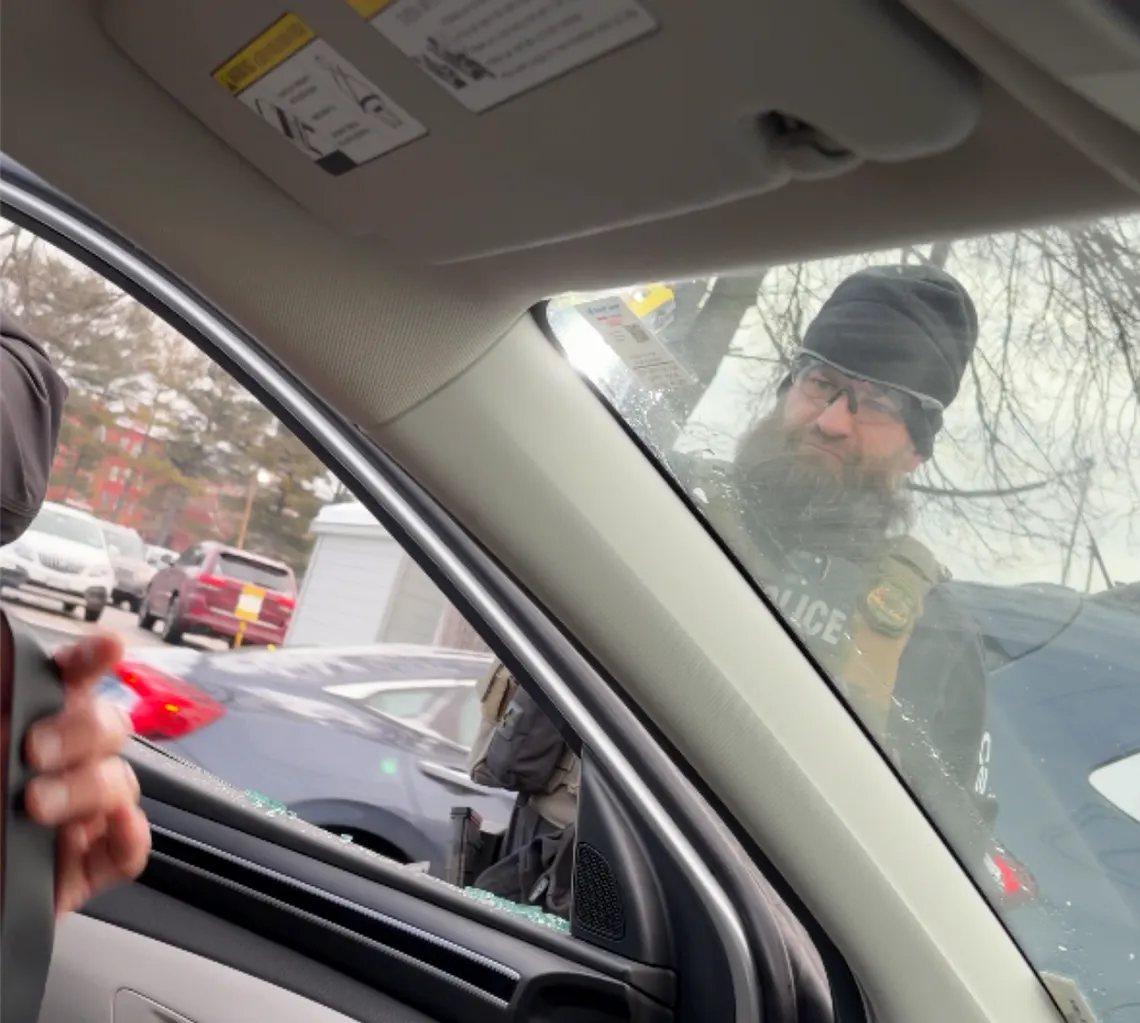
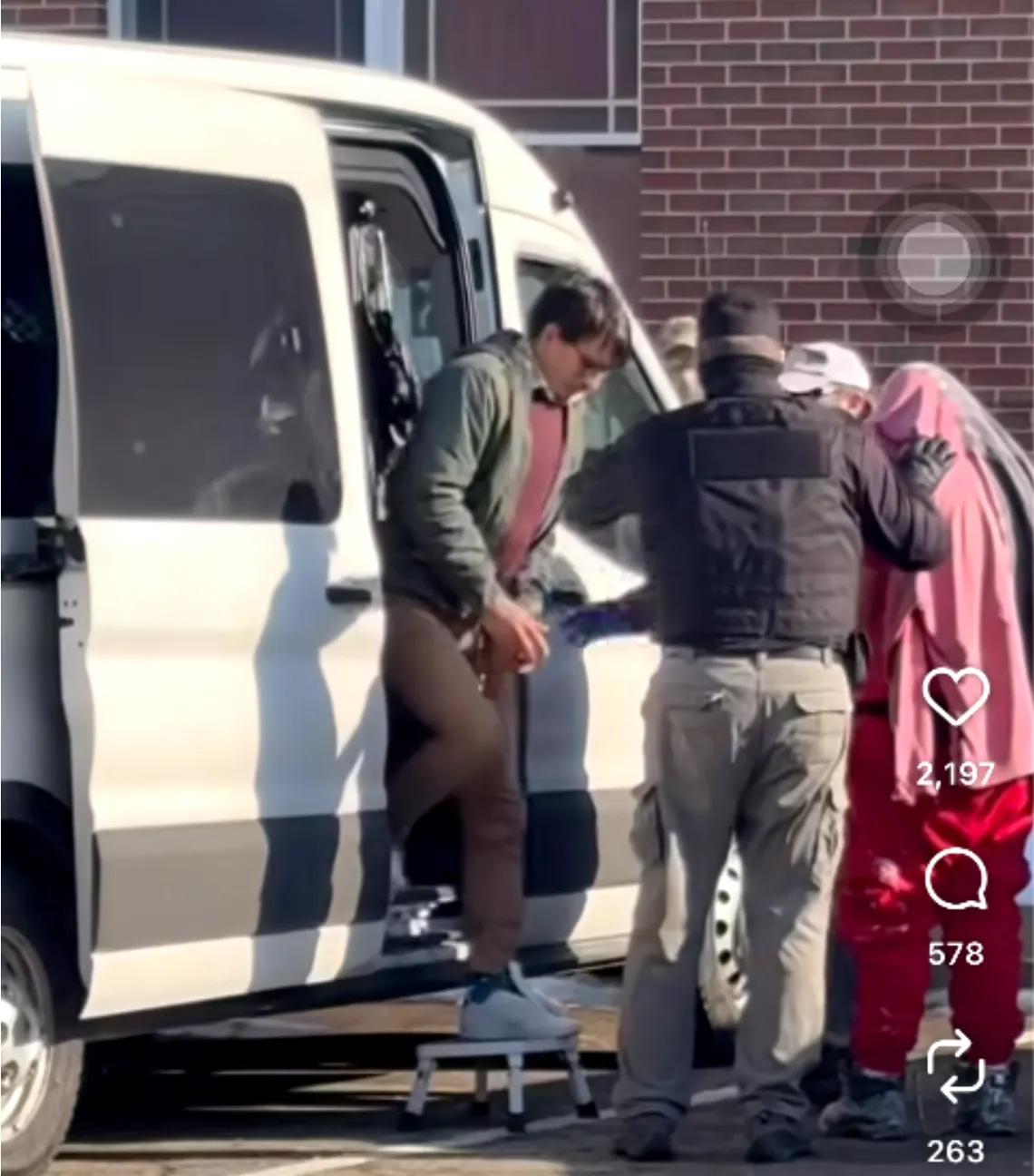
In January, as the Trump administration launched an immigration crackdown in Maine, Juan Sebastián Carvajal-Muñoz was intercepted on his way to work. The civil engineer from Colombia told officers he had a visa through his employer, but the immigration agents who arrested him did not seem to care. According to the federal lawsuit he later filed against them, they smashed his window, dragged him out of his car while pointing a Taser at him, cuffed him, forced him into the back of an unmarked SUV and drove him across state lines.
Officers released him from an ICE facility in Massachusetts around 9 p.m. that evening, when they realized they had no reason to hold him. He was left stranded in a different state with sore wrists, a broken car window, and the unshakeable fear that it could happen again.
Officers are rarely charged with a crime for abusing a civilian, so a lawsuit is often the best recourse if someone believes their rights were violated. Congress has explicitly given people the ability to bring such lawsuits against state and local officials, but there is no equivalent for addressing constitutional violations by federal officials. Instead, people suing federal agents must rely on a narrow remedy created by the courts — one the Supreme Court has sharply restricted in recent years.
Nevertheless, Carvajal-Muñoz filed suit in federal court this spring with the help of the ACLU of Maine, part of a broader search by immigrant rights attorneys for ways to hold officers responsible. Preserving the ability to sue is crucial, they say, as federal authorities increase their arrests of immigrants and citizens.
“There has to be a way to hold federal officers accountable when they are plainly violating the U.S. Constitution,” said Carol Garvan, legal director for the ACLU of Maine. She noted that Carvajal-Muñoz was arrested even with a Real ID on hand, which proved his legal status. “That is something that lingers for him [and] people all over Maine and all over the country. You start to think, what could protect you if there is this kind of violation?”
In an email, a spokesperson for the Department of Homeland Security wrote that any officers who violate policy are “held accountable,” and that “DHS law enforcement methods abide by the U.S. Constitution including the Fourth Amendment.” The spokesperson did not respond to questions about civil suits.
In 1971, the Supreme Court opened a small legal window to sue federal law enforcement in the case of Bivens v. Six Unknown Federal Narcotics Agents. The Court ruled that Webster Bivens could sue federal drug enforcement officers after they forced themselves into his home in New York, threatened to arrest his wife and kids, searched his house, and arrested him, all without a warrant.
Over the next decade, the Court ruled that Bivens could apply in two other contexts — sexual discrimination in federal employment, and deliberate indifference to medical needs in a federal prison — but since then, it has repeatedly blocked many lawsuits staking claims based on the Bivens case. In recent years, lower federal courts have also been reluctant to rule in a plaintiff’s favor in such cases.
In one 2024 court decision, a federal judge noted that circumstances where a court could extend Bivens were “as rare as the ivory-billed woodpecker.” In the case, federal prisoner LaQuan Johnson was attempting to sue corrections officers for failing to protect him from multiple attacks and denying him medical care afterward. “Just like its natural history analogue,” the judge wrote, “both the decision and the bird are staring extinction in the face.”
In 2022, Andrew Fields tried to sue the federal Bureau of Prisons and its employees over prolonged abuse he said he suffered inside a federal prison in Virginia. Officers locked him in painful restraints, beat him with fiberglass shields and slammed his head into a concrete wall, his complaint said. In a rare win for federal prisoners, the 4th Circuit Court of Appeals ruled his case should proceed. But the Supreme Court reversed that decision last summer, sending the case back to the Fourth Circuit, which affirmed the dismissal of the case.
The Court’s application of Bivens has created some arbitrary differences in who can sue and who cannot, said attorney Gregory Cui with the MacArthur Justice Center, who worked on Fields’ case. “If they punch you in the face you have no remedy, but if they don't give you your medicine you do have a remedy,” he said of people in federal prisons, based on the situations where courts have said Bivens applies. Similarly, people in federal prisons have few avenues to sue their jailers, he said, while those in state prisons “20 miles down the road” have far more remedies available – though these cases are also difficult to win.
The same goes for people assaulted by federal officers versus a local police department. In 2020, for example, the Supreme Court ruled that a family could not sue a federal Border Patrol agent after he shot and killed their 15-year-old son.
The Supreme Court further narrowed Bivens in 2022, when a bed-and-breakfast owner attempted to sue a Border Patrol agent for allegedly forcing his way onto the property and throwing the owner on the ground, in pursuit of a guest. The court’s ruling against the owner made it incredibly difficult to find “new contexts” in which Bivens would apply, and gave Border Patrol near immunity from such lawsuits.
That aperture may shrink even further this fall. The Supreme Court has agreed to take up another Bivens case, this time filed by a federal prisoner who says he was denied treatment for a broken tailbone that was a result of a prison fight. The Court will decide whether his claims are similar enough to one of the original Bivens cases to proceed.
The case is the latest opportunity by an increasingly conservative Supreme Court to whittle away Bivens so that it is largely a “dead letter,” Cui said. “The fact that [the court] is doing this now in the midst of one of the most dangerous expansions in the use of federal law enforcement is alarming. We could argue about this kind of legal issue in normal times, but these are not normal times.”
Civilians can file cases under a law called the Federal Tort Claims Act, but the law carries limitations. The liability is with the United States government rather than an individual officer, cases are heard by a judge instead of a jury, and a plaintiff can’t sue for punitive damages. Under the second Trump administration, the ACLU has filed 54 such claims related to immigration enforcement across 17 states and Washington, D.C. Currently, a group of Jan. 6 rioters are also using this route to try to win money from the federal government over their arrests and incarceration.
Given the limited avenues for relief and intensified immigration enforcement, attorneys across the country are increasingly looking for ways to use state law to go after federal officers instead. Carvajal-Muñoz’s federal lawsuit also makes a claim against officers for violating his constitutional rights under the Maine Civil Rights Act. While more states are passing and trying to use similar state laws to hold federal officials accountable, attorneys say they are largely untested.
Garvan hopes that if Carvajal-Muñoz’s case succeeds, it will be a blueprint for lawsuits in Maine and across the country. “If we are not able to bring a claim under Bivens and we are not able to bring a claim under our state's Civil Rights Act, then people are left without a remedy at all,” Garvan said. “We’re really hopeful that this could be a tool.”
Similar laws exist in states like Illinois, New Jersey, New York, California and Massachusetts, and many legislatures are considering comparable bills. Minnesota legislators introduced a similar bill after the killings of Renee Good and Alex Pretti, but it failed to pass. The Trump administration is currently fighting Illinois’ state law in court, a statute that only applies to those conducting immigration enforcement. Sen. Sheldon Whitehouse, a Democrat from Rhode Island, and Rep. Hank Johnson, a Georgia Democrat, have also proposed a federal Bivens Act to codify nationally the right to sue a federal employee in court.
The agents who arrested Carvajal-Muñoz have until the end of September to respond to his suit. An attorney for the defendants declined to comment.
Carvajal-Muñoz, meanwhile, has tried to return to normal life after his detention, but the threat of rearrest or worse remains. In July, during an enforcement surge, ICE shot and killed 25-year-old Johan Sebastián Durán Guerrero – another immigrant who arrived in Maine from Colombia, had work authorization, and was accosted in his car in the early morning.
“For someone who has already been taken off the streets by ICE agents, seeing something like that makes it all the more scary,” Garvan said.