As the newly installed Trump administration rapidly launched an array of criminal justice and immigration policy changes in early 2025, The Marshall Project dedicated our reporting team to explaining the impact on families and communities. Those topics helped define our year and gave us a rich vein of reporting.
The new administration
One of the first executive orders President Donald Trump issued in office allowed the Justice Department to contract with private prison operators. Shannon Heffernan’s reporting noted that a small portion of the prison population might be moved to private facilities, but that immigration detention contracts — which were already allowed — would be more lucrative.
With Trump’s focus shifting away from Justice Department investigations of troubled police departments, a team of reporters — Daphne Duret, Daja E. Henry, Christie Thompson, Lakeidra Chavis, Geoff Hing and Wilbert L. Cooper — examined how that would affect cities with consent decrees.
Duret and Jamiles Lartey noted that Trump had a complicated relationship with police officers due to his Jan. 6 pardons and deep cuts in federal funding for community policing. Joseph Neff explained why many of the president’s pardons violated standards meant to ensure fairness and protect the public. And Heffernan, Beth Schwartzapfel, Jill Castellano and Hing explained how the Trump administration was using the criminal justice system to massively expand immigration detention.
Immigration under pressure
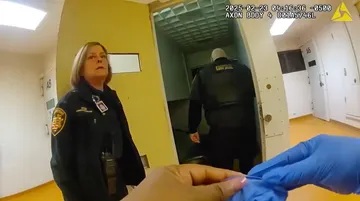
Our coverage of the intersection of criminal justice and immigration policies continued to grow throughout the year as the Trump administration ramped up deportation efforts. Thompson and Univision Noticias’ Patricia Clarembaux reported on the spike in solitary confinement for people detained by Immigration and Customs Enforcement, describing the experience of a woman who was locked in a windowless isolation cell with a broken toilet in Louisiana for almost two months.
In another analysis, Thompson and Anna Flagg found that ICE was deporting thousands of people who had no criminal convictions or only minor offenses on their records. People with no criminal convictions made up two-thirds of the more than 120,000 people deported between January and May, according to our data review.
Shoshana Walter, Castellano and Duret told the story of a man who was arrested and deported from Florida, despite a court order forbidding a state immigration law from being enforced. “They never gave me the opportunity to defend myself,” the man told The Marshall Project.
To understand the pressures on families whose loved ones have been detained by ICE, Heffernan and Futuro Investigates’ Julieta Martinelli traveled to El Refugio hospitality house in Lumpkin, Georgia, to spend a weekend with volunteers and visiting families looking for food and respite. The report, published in English and Spanish, was a collaboration with Latino USA and Futuro Investigates.
Our immigration coverage also included a limited-run newsletter, Immigration Nation — developed by a team that included Rachel Kincaid, Annaliese Griffin, Rebecca McCray and Manuel Torres — that put our reporting directly in the inboxes of readers. McCray wrote about ICE checkpoints set up far from the border as the immigration roundup spread across the country. Hing explained how encounters with police could lead to an arrest, even in sanctuary cities.
Dying behind bars
Deaths in custody were another major reporting theme for us in 2025. Ilica Mahajan, Anna Flagg and Aaron Sankin combed a federal data set with five years of deaths in U.S. prisons and jails and identified nearly 700 people who had died in custody, but weren’t on the list. That led us to reach out to families who had lost loved ones. They talked about not knowing even the most basic details of what happened to their incarcerated family members.
One of those mothers was Janice Wilkins, whose son Denorris Howell was strangled to death in the Mississippi State Penitentiary in 2020. He was one of 42 people who died by homicide in Mississippi prisons over the past decade, according to reporting by The Marshall Project-Jackson’s Daja E. Henry, Mississippi Today, the Clarion Ledger, Hattiesburg American and The Mississippi Link. We found only six convictions in those cases.
We also talked to families about what belongings were returned to them from prison officials after a loved one died behind bars. They told Aala Abdullahi and Heffernan about waiting to get a brother’s ashes, getting a plastic bag with a son’s hat from his favorite band, or hoping to get a treasured Bible that never appeared.
In New York state, Neff investigated the death of Jason “Poppy” Phillips, who choked to death in Greene Correctional Facility after an epiglottis infection went untreated. He found that more than 30 people who were experiencing a health crisis in New York prisons died in the past decade of preventable or treatable conditions.
Our Ohio reporting team — Doug Livingston, Brittany Hailer and Mark Puente — wrote about the death of Tasha Grant, a double amputee, who died while being restrained by medical personnel after being transferred from jail because of chest pains.
Abuses hidden in prison infirmaries
An investigation by reporters Alysia Santo and Neff found 46 allegations that corrections officers had assaulted prisoners in the medical wings of New York prisons since 2010. The reporters based their findings on court settlements, disciplinary records and pending lawsuits. Three prisoners died, while many others were left with severe injuries such as collapsed lungs and broken bones.
The reporters also looked at the role of nurses following violence in prison infirmaries. Santo and Neff identified 61 allegations from 2010 through 2024 of medical staff concealing evidence of guards’ abuse, usually by forgoing examinations or not documenting injuries.
Producing local journalism
We launched our third local newsroom in January — this one in St. Louis. Marlon Walker, managing editor of local, led the expansion, which includes reporters Jesse Bogan, Katie Moore and Ivy Scott. As with all of our local teams, they work closely with journalists in their community to help close the reporting gap left by shrinking newsrooms.
This year, our teams in Cleveland, Jackson, Mississippi, and St. Louis co-reported on the moldy, filthy, vermin-infested conditions of jails, and detailed the unhealthy lack of sunlight and fresh air in jail compounds in all three cities.
In St. Louis, we collaborated with St. Louis Public Radio to honor murder victims whose deaths remain unsolved, working with their families and a local artist to describe their lives and create portraits of them. To go with the art project, Scott put together guides to help families deal with the criminal justice system and their grief, and we held community events to share the portraits and spark conversation.
Working with The Midwest Newsroom, Moore told the story of a woman with HIV who spent six years in solitary and successfully sued to get the state of Missouri to change its policy. Bogan outlined the many failings of the St. Louis Justice Center.
In Ohio, Hailer investigated unrest at a youth residential treatment center despite new operators who came in with new expectations for change. With News 5, Puente and Livingston documented complaints of excessive force against the Downtown Safety Patrol in Cleveland and found that Black drivers received 75% of the tickets those officers issued.
In Jackson, reporter Caleb Bedillion found that Mississippi judges have continued to approve no-knock warrants, despite the 2015 death of a Monroe County man who was shot to death after SWAT team members forced their way into his house. Meanwhile, Henry chronicled the federal takeover of the Hinds County jail.
Death Row reporting
We also continued our longtime reporting on the death penalty, with a story by Maurice Chammah on the use of the flawed “psychopath test” to persuade jurors that Texas should execute Robert Roberson — a man many argue is innocent. Texas’ highest criminal court blocked his execution in October and sent the case back to the trial court.
Freelancer Leonora LaPeter Anton revealed the pipeline from a violent Florida reform school to death row for former students.
Punishing expectant mothers
Cary Aspinwall added to her reporting on the criminalization of pregnancy with a story on Georgia, Alabama, Oklahoma and other states charging women who had miscarriages or stillbirths with a crime.
Shoshana Walter continued her reporting on the prevalence of false positive drug tests during childbirth with stories on doctors who are pushing to do away with the flawed tests and states considering legislation to protect patients. She also collaborated with CBS Sunday Morning on a joint investigation featuring her reporting on the false positive tests in a television broadcast.
Being transgender in prison
Schwartzapfel continued her insightful examination of the experiences of transgender people in prison, looking at the constitutional questions raised by Trump’s ban on gender-affirming care and the ensuing confusion in prisons over his order. She also told the story of Dee Farmer, who was the first transgender prisoner to take her case to the Supreme Court and the first to get the court to address sexual assault in prison.
Taking readers inside prisons
Our Life Inside essays offer people a glimpse of what life is like during and after prison for incarcerated people and their families. For the Fourth of July this year, we asked incarcerated people an updated version of Frederick Douglass’ question from 1852: “What, to the currently or formerly incarcerated American, is your Fourth of July?” We published answers from 20 people. Jazzy Mason said, “I hear the word ‘independence’ and think of how many of us are still fighting for the right to simply be.”
Kwaneta Harris, a prison journalist incarcerated in Texas, also wrote for us this year about sexual intrusion, harassment, coercion and violence as daily realities in women’s prisons. Deborah Zalesne, a law professor at CUNY School of Law, collaborated on the piece.
Reaching incarcerated readers
The Marshall Project is dedicated to getting our journalism into prisons and jails for our incarcerated readers. Martin Garcia manages News Inside, our print publication available in 2,167 prisons and jails in 48 states; Washington, D.C.; Vancouver, Canada; Tijuana, Mexico; and Panama City, Panama.
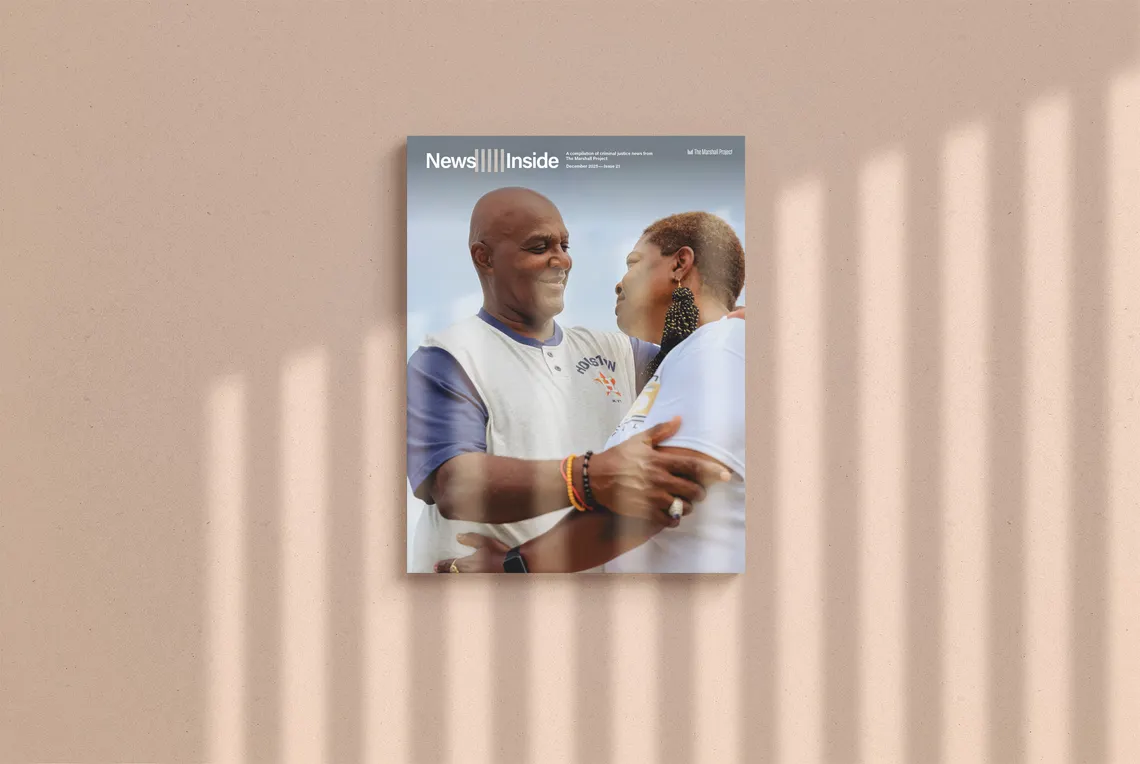
It includes stories from our website as well as special features like a crossword puzzle and Reader to Reader advice. In a recent issue, incarcerated readers shared how they manage their finances inside and stretch the few dollars they make. A reader incarcerated in Illinois had this advice, “I build a financial template with a core surrounding my essential needs, then expand from there. This could differ for all, depending on what is essential to you, for me, it’s coffee and protein.” Inside Story, our video series produced by Lawrence Bartley and Donald Washington Jr., is available in 1,728 prisons and jails in 44 states and Washington, D.C.
In Cleveland, Outreach Manager Louis Fields is getting our work into local prisons and jails. In June, he was part of a powerful gathering organized by Ohio State’s Dr. Terrence Hinton at Pickaway Correctional Institution that brought the parole board, law enforcement, and Ohio Department of Rehabilitation and Correction leaders into conversation with the men inside.
Sharing our data with other newsrooms
Through Investigate This!, led by Michelle Billman, our reporters and editors have created and distributed eight reporting toolkits in the past 18 months that allow other journalists to report on a topic we’ve investigated in their own communities. The toolkits provide tips for covering deaths behind bars, heat in prisons, prison staffing levels and more. These toolkits have been used by reporters from other newsrooms to produce 45 published news stories. Investigate This! has also held four webinars with almost 650 people registered, and has done consultations with journalists to help troubleshoot issues they are having with stories or to walk them through our data.
Newsletters and audience
Our Closing Argument newsletter, led by Lartey, is focused on one vital criminal justice issue each week to deepen readers’ understanding. Topics this year included who should pay victims of police misconduct, the movement in some states to institute cash bail requirements and why closing prisons is so complicated.
Opening Statement, our daily newsletter edited by Andrew Cohen, gives readers a comprehensive view of what is happening in the criminal justice universe.
Newsletter Strategist Kincaid manages our national newsletters and helped develop our two local newsletters in Cleveland and Jackson, and Newsletter Editor Griffin edits and oversees our newsletter production. Together, they develop new newsletters to respond to ongoing news stories, like the mass deportation crisis, as well as to audience interests. You can sign up for any of The Marshall Project’s newsletter offerings on our subscription page.
Across our priority social platforms of YouTube, Instagram, Reddit and TikTok, our posts were viewed more than 22 million times and spurred tens of thousands of comments, shares and saves. These award-winning videos, carousels and more were produced by former Audience Engagement Producers Chris Vazquez and Kristin Bausch as well as Audience Engagement Strategist Ashley Dye.
Social video standouts include Vazquez with reporter Maurice Chammah discussing changes in execution methods and whether firing squads are more humane. On Instagram, Bausch’s carousel with Ilica Mahajan’s reporting helped people understand how police monitor protesters, and Dye’s co-posted carousel with The Midwest Newsroom shows how a woman with HIV changed Missouri’s solitary confinement policy.
Among several popular Reddit AMAs produced by Dye, reporters Cary Aspinwall, Daphne Duret, Jamiles Lartey and Christie Thompson fielded questions about immigration enforcement under Trump. Plus, local reporter Daja E. Henry and Mississippi Today reporter Mina Corpuz shared what they know about Mississippi prison deaths after a year of investigating.